Research
 From national recognition to record R&D growth, UGA research is making headlines.
Over the past few years, the University of Georgia has cemented its reputation as a research powerhouse. With a commitment to innovation, strengthening economies, better health outcomes and improved lives throughout the world, the institution’s robust research domain begins with outstanding faculty.
Our researchers and educators are recognized by the nation’s most prestigious academies. In 2026, Distinguished Research Professor Robert Schmitz and Professor Emeritus Gerald Hart joined the National Academy of Sciences, honoring their work in plant science and biochemistry, respectively, and bringing UGA’s total number of NAS members to 18. Samantha Joye, one of UGA’s top marine science scholars, was also elected to the National Academy of Engineering. In addition, UGA experts in cellular biology, vaccines and immunology, and complex carbohydrates were named Fellows of the American Association for the Advancement of Science, raising UGA’s count of AAAS fellows to 59.
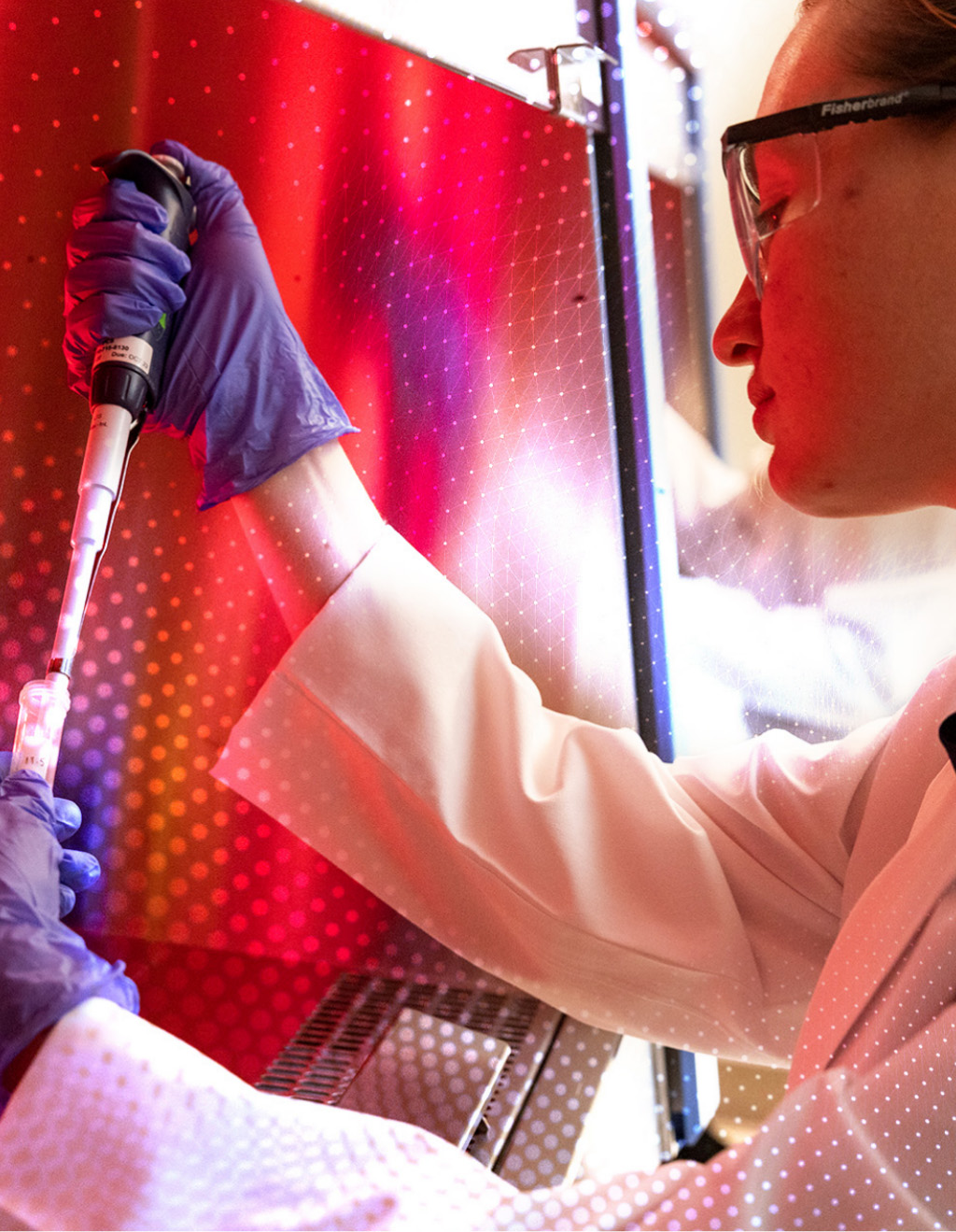

In the last decade, endowed faculty positions have expanded to 420, a growth of 60%. A commitment to faculty continues with UGA welcoming two new Georgia Research Alliance Eminent Scholars in 2026, bringing the total to 18 active faculty with this distinction.
“Our achievements in research and our goals for pushing further represent something even greater—the university’s commitment to elevating the human condition,” said President Jere W. Morehead. “As Bulldogs, we are tenacious and remain committed to reaching higher and accomplishing even more.”
Research and development expenditures have soared nearly 75% since 2015, eclipsing the $650 million mark for the first time in FY 2025. For the fourth year in a row, UGA also ranks #1 for bringing new products to market based on university research, demonstrating an economic impact that is stronger than ever.
Since 2020, 97 faculty members have joined UGA through presidential hiring initiatives, enhancing expertise in key areas such as brain and behavioral health, data science and artificial intelligence, electric mobility, and integrative precision agriculture. In addition, President Jere W. Morehead has announced that resources have been allocated to recruit up to 34 new faculty through the 2026-2027 Presidential Faculty Hiring Initiative.
“A world-class faculty is the driving force behind any successful research university, and I look forward to seeing their collective expertise continue to redefine the boundaries of what is possible,” Morehead said.
Looking ahead, the preliminary accreditation of the UGA School of Medicine positions the university to expand its research capabilities exponentially.
The School of Medicine, located on UGA’s Health Sciences Campus in Athens, will be supported by a new $100 million medical education and research facility that is scheduled for completion in December. The facility will feature advanced clinical simulation, team-based learning spaces, and biomedical research infrastructure.
“With the new School of Medicine, UGA has the extraordinary combination of strengths to transform medicine as the 21st century demands,” said Shelley Nuss, founding dean of the School of Medicine.